Material Coincidence
The following is a tutorial essay for Knowledge and Reality with Daniel Kodsi. In effect, it is a quick agenda for an hour-long discussion on a guiding question, which for this week was ‘How widespread is material coincidence?’. A free-standing and much more readable version of some of the material may eventually go up on my Substack.
I really should have found Bounds of Possibility; it would have been super helpful for this essay, and is great in general.
§I argues that immaterial things are both materially coincident and fairly widespread. §II argues that every modal occupation profile (Hawthorne 2006) corresponds to at least one material thing. Bennett (2004) discusses complete modal profiles, which (as far as I can tell) are equivalent to Hawthorne’s, although Bennett characterizes them in terms of essential properties rather than in terms of worlds; this turns out to make it difficult to ensure we don’t generate inconsistent profiles. §III argues that every such profile corresponds to at most one material thing. Thus, I defend the view that Fine (2003) calls (strict) mild monism. On this view, for every actual nonempty matter-filled spacetime region, there is one distinct material object coincident there for each distinct modal occupation profile (that is, for each distinct way to map every non-actual world to a distinct one of its matter-filled spacetime regions).
First, I spell out a bit what material coincidence is. I take it that x and y materially coincide just in case any matter that composes x also composes y, and vice versa (compare Fine 2003). Notice that every object materially coincides with itself. In some sense, coincidence is stronger than overlap: it is something like complete overlap. I’ve characterized coincidence in present-tense terms, but we also have stronger notions of permanent coincidence (which obtains when two things coincide at all times), and necessary coincidence (which obtains when, at all worlds, two things coincide at all times).
I take matter to be space-filling: some matter x composes some matter y just in case the space occupied by x is a subset of the space occupied by y (compare Thomson 1998). This squares well with the judgment that, say, clay is material, but gravitational or magnetic fields are not: presumably, a gravitational field can spatially coincide with a magnetic field, with neither composing the other; so, by the space-filling principle, the fields are not both material. By this principle, we also have that material coincidence entails spatial coincidence. Fine (2003) disagrees; his (purported) example of material coincidence without spatial coincidence is the relationship between a loaf of bread and the bread that composes it. The idea seems to be that the loaf occupies its air pockets, although the bread that composes it doesn’t. But for one, the air pockets are not empty space: if the loaf occupies those pockets, then it seems like the air composes the loaf. But if the bread materially coincides with the loaf, then the air must compose the bread as well, and so the bread must occupy those air pockets after all. But set this aside, and suppose that the pockets are in fact materially empty. Then, since the loaf occupies materially empty space, it seems like we must count the loaf as not (purely) material. This is an odd result. However, Fine is right that, conversely, we can have spatial coincidence without material coincidence: the force fields mentioned earlier are one example. So, to show that two things do not materially coincide, it suffices to show that they do not spatially coincide. But to show that two things do materially coincide, it does not suffice to show that they spatially coincide, unless we know that they are material.
I. Immaterial things
On the above definition, material coincidence obtains between two objects just in case it obtains between their material parts. If two things lack material parts, then (vacuously) they materially coincide: any matter that composes one composes the other, because no matter composes either. This might be slightly unnatural, but it seems right: if we ask how often films sonically coincide, it’s odd but not wrong to point to silent films, especially if there are an awful lot of silent films. Here, I argue that there are an awful lot of immaterial things.
With the example of force fields, we’ve covered things which are physical but immaterial. These are surely in good standing: they have spatiotemporal properties (stronger here, weaker there), and play a causal role in our best physical theories. Between revising our naive ontology to include immaterial things like fields, or revising our best physical theories, it seems better to choose the former. This is especially so because we can give a simple, plausible error theory for the naive ontology: we’re less willing to believe in things that we can’t (directly) see.
We also have abstract objects: roughly, those that necessarily lack material, spatiotemporal, and perhaps causal properties. Here, there may be an even stronger inclination to not believe that there are such things. There isn’t anything which is a prime number between 2005 and 2010; by contrast, there is something which is a prime number between 2010 and 2015 (namely, 2011). So, there is something which is a number. Much of mathematical talk seems to presuppose the existence of mathematical objects. Rather than (at best) reinterpreting all such talk, we should prefer to revise our naive ontology to include mathematical objects. Of course there are a lot of mathematical objects; since each one is materially coincident, it’s hard to even characterize how many distinct materially coincident objects there are.
I characterized abstract objects as necessarily (and permanently) immaterial; arguably, though, there are also contingently (and temporarily) immaterial objects. All of these also materially coincide. Once again, we should admit these objects into our ontology for the reason that it’s better to revise our folk ontology than our best theories from the mature sciences. For instance: ‘the former Queen of England is dead’ is true. On our best semantic theories, the definite description presupposes (and on our other semantic theories, it asserts) that there is some unique thing which is the former Queen of England; since the sentence is straightforwardly true (that is, it doesn’t seem to suffer from presupposition failure), its presupposition is true as well: that is, there is some unique thing which is the former Queen of England. Presumably, this is not some material thing (suppose that her corpse was cremated and the ashes scattered). But it once was material, when the former Queen of England was living; so, it is temporarily immaterial. This argument generalizes, such that every once-material or future-material thing is presently something; all of these things are materially coincident.
As another example: a constant-domain semantics for modal logic might be part of the simplest and strongest theory, perhaps the only one that can deal well with certain technical difficulties. This would validate the Barcan formula and its converse. In particular, if it’s possible that there’s something which is f, then there is something which is possibly f. It’s possible that I’d have an older sister, so there is something which is possibly my older sister. If this is so, then we again have a conflict between our folk ontology and a well-supported scientific theory; it seems better to revise the former rather than the latter. But then every possibly-material thing is actually something; all of these things are materially coincident. The arguments in this paragraph are, of course, adapted from Williamson (2002, 2013).
So, material coincidence obtains among immaterial objects; these range from physical things (like gravitational fields), to abstract things (like numbers), to once-material things (like destroyed objects), to possibly-material things (like possible people). Material coincidence is at least this widespread. Of course, much of the coincidence debate involves coincident objects apparently having different persistence conditions; if one accepts permanentism, one might take the apparent persistence conditions of material objects to be something like the conditions under which something is material; but see Korman 2015 for a negative view of this diagnosis.
II. Plenitude
In some sense, though, the foregoing does not show that material coincidence is very widespread at all; it’s consistent with no two distinct material objects ever being materially coincident. In this section, I argue for modal plenitude: every function from worlds to regions of their matter-filled spacetimes picks out a material object. The argument proceeds in two stages. First, I argue that we should accept some material coincidence. Second, I argue that, given that we should accept some material coincidence, we should accept modal plenitude.
To use a stock example: consider a statue, Athena, and the piece of metal composing it, Alloy. Suppose that Athena and Alloy were created at the same time in the same way (say, with molten metal being poured into a mold, such that it formed into Athena just as it formed into Alloy), and were destroyed similarly (say, being instantaneously smashed into tiny fragments), such that Athena and Alloy are (permanently) coincident. Nevertheless, they seem to have some differing properties. For instance, it seems that Athena, but not Alloy, could have comprised a different type of metal. Alloy, but not Athena, essentially comprises the type of metal that it in fact does. (Compare Baker 1997.) Further, suppose that Athena has a shape characteristic of Roman statues, but the Romans would not have made statues out of (at least this particular kind of) metal. Then it seems that Athena, but not Alloy, is Romanesque. (See Fine 2003.) Finally, imagine that I removed Athena’s right hand, and replaced it with a new one of a different metal. In this case, it seems like Athena, but not Alloy, would remain whole and complete. (See Thomson 1998.)
Note that there is minimal room for the predicates ascribed to Athena but not Alloy (or vice versa) to shift in context, because we’ve only used each predicate once; and it seems implausible that these predicates are opaque in the way that ‘so named for his height’ is. The judgment in, say, the first case is not that there could have been a very similar statue made of a different metal; rather, Athena itself could have been made of a different metal.
Further, these particular considerations make the ‘phasalist’ solution unpalatable. Something is a teenager just in case it is a human organism with such and such properties (something like being of the right age); when a human organism becomes and later ceases to be a teenager, there is no separate teenager that comes into or goes out of existence. But one cannot take a similar line about statues here: a teenager is essentially a human organism, but (as the considerations above, especially the first and third, show) there is no underlying ‘substance’ which a statue essentially is, or at any rate the material coincident with it fails to be this substance. On the view I’m defending, there is an object Teen which is concrete and coincident with me just at the worlds and times where I am a teenager. But Teen is not a teenager: it is not a human organism, and it is not even teenaged.
So, Athena and Alloy are (permanently) coincident, yet non-identical. For genuine identity is necessary, but (by the first and third considerations) Athena and Alloy are possibly distinct. Alternatively, we have that in all three cases, Athena and Alloy differ in their properties; but one and the same thing cannot (at the same time) really differ in properties.
Now, I argue that we should accept a lot of material coincidence, following Bennett (2004). Two theoretical virtues are simplicity and explanatory strength. The fewer free-moving pieces in a theory, and the more it can explain with the pieces it has, the better. One thing an adequate theory must predict is that distinct material objects may permanently coincide. These objects differ in their modal and sortal properties; but why do they have the special properties they do? We’ve just seen that it can’t be in virtue of their material properties, because holding those fixed doesn’t fix their special properties.
These special properties also don’t seem to be up to us in any particular way: spelling out when and how we generate new material coincidents is difficult. There is a particular problem with applying things retroactively: if we begin thinking in the right sort of way about Athena versus Alloy a year after both are shattered, how does there retroactively appear a distinct coincident material object?
One final option seems to be to leave the special properties primitive, in some sense: neither the material world nor our minds explain these special properties, so perhaps there just isn’t anything in virtue of which they obtain: each object has the modal properties it does because some object or other has just those properties. Now, either the possible modal profiles are restricted severely down from just any that are metaphysically coherent; or they are not so restricted. If we take the restricted view, we add an extra parameter, and only increase the mysteriousness (what explains why only these profiles are allowed?); on the unrestricted view, for every possible modal profile, there is something fitting it. There is no particular reason that Athena has the modal profile it does; something had to. It’s just that we pick out Athena because it has a nice modal profile, such that we benefit from seeing it.
Now, Bennett sees one issue for the unrestricted primitivist view: if one just combines all accidental and essential properties in all logically consistent ways, one might end up with combinations like being green essentially but only being colored accidentally. But using Hawthorne’s (2006) characterization of modal occupation profiles gives us a nice answer: we just pick out regions of (filled) spacetime at each world; something which is essentially green corresponds to a modal occupation profile with a range of only green regions at any world; this automatically delivers that the object is essentially colored (as its modal occupation profile has a range of only colored regions at any world).
To recap: we have a few considerations suggesting that distinct material objects with differing special properties can be (permanently) materially coincident. To explain their differing properties, we cannot appeal to their material features (as those remain fixed), or to our own thinking about them (as we can uncover real distinctions in hindsight). We do best by leaving the special properties primitive, with each thing having the modal profile it does just because something had to. Then, we still need a natural explanation of which modal profiles are available; the most natural option is to allow all possible modal occupancy profiles, by taking functions from worlds to regions of (filled) spacetime within them.
So, we embrace a wild plenitude of objects; for any filled region of spacetime, there are unimaginably many objects which happen to be actually spatially coincident at that region, because there are unimaginably many modal occupancy profiles which map the actual world to that filled region of spacetime.
III. Mild monism
We should treat mild monism as the default view: to accommodate distinct necessarily coincident objects, one must give up the nice simplicity that we achieved above. Actual and possible material composition seem to be able to explain a lot; allowing these to vary freely should already let us explain a lot about, say, essential and accidental properties. Adding in further distinctions ‘by hand’ also undermines our ability to say just how many materially coincident material objects there are; a nice feature of our theory is that it gave us such an answer. Our theory also gives a nice analogy between extensional equivalence and material coincidence, while respecting the judgment that, at some level, objects are material insofar as all that matters is what matter (possibly) composes it. So, we should be wary of adding in extra distinctions between necessarily materially coincident objects, if we can at all avoid it.
Fine (2000) provides an apparent counterexample to mild monism. The basic idea is to cook up a pair of distinct artifacts which are in some sense tied together. Suppose Fluent communicates with his elder daughter in the language Prittle, and with his younger daughter in the language Prattle; the written symbols which express a Prittle sentence often also express a Prattle sentence. Fluent writes a letter to his elder daughter, which says (in Prittle) that he is writing to demonstrate his fluency in both languages: he is writing, with the same pen strokes, a letter which says something similar in Prattle. Fine wants to maintain that, although they necessarily coincide materially, the letter in Prittle is distinct from the letter in Prattle. They are in different languages, contain subtly different messages, and have different recipients.
As a similar example, suppose that a painter creates (what she intends to be) two paintings at once, Dog (Sloth) and Sloth (Dog). They are painted on the same canvas with the same brushstrokes, with Dog (Sloth) painted right-side-up and Sloth (Dog) painted upside down. The former depicts a dog, the latter a sloth; the former being hung right-side-up means the latter is hung upside-down; the former might be more elegant and well-painted than the latter. See this image. The two paintings might even belong to different people: perhaps the former is a gift to the painter’s elder son, who loves dogs; the latter is a gift to her younger son, who loves sloths.
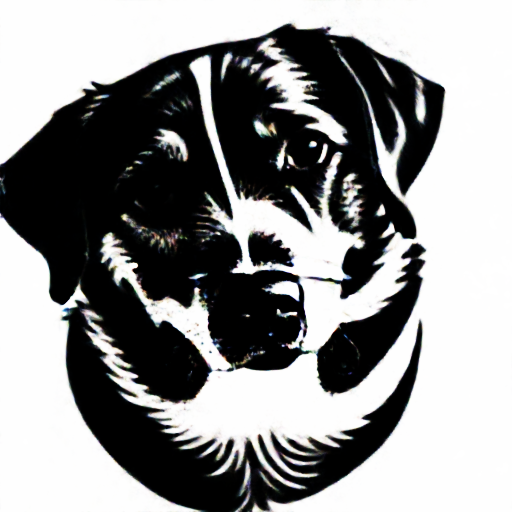
In both cases, we should reject the initial description. Distinguishing between the material object in each case and its more non-material artistic content helps. If I own two copies of some novel, I own two books counting by material object but only one book counting by content. Similarly, if I have two copies of the same drawing, I have two drawings counting by material object but only one drawing counting by content. I want to suggest that the two cases above work analogously: there are two letters or two paintings, counting by content, but only one letter and only one painting, counting by material object. Presumably, in all of these cases, the content is not some material thing. So, insofar as there is a distinction between the letter in Prittle and the letter in Prattle, or between Dog (Sloth) and Sloth (Dog), this is not a distinction between (purely) material objects. So long as something along the lines of this diagnosis can be maintained, it should be maintained for the theoretical benefits discussed above.
References
- Baker, L.R. (1997). Why constitution is not identity. Journal of Philosophy, 94: 599-621.
- Bennett, K. (2004). Spatio-temporal coincidence and the grounding problem. Philosophical Studies, 118: 339-71
- Fine, K. (2000). A counter-example to Locke’s Thesis. The Monist, 83: 357-61.
- Fine, K. (2003). The non-identity of a thing and its matter. Mind, 112: 195-234.
- Hawthorne, J. (2006). Plenitude, convention, and ontology. In Metaphysical Essays, 53-70.
- Thomson, J.J. (1998). The statue and the clay. Noûs, 32: 148-173.
- Williamson, T. (2002). Necessary existents. In Anthony O’Hear (ed.), Logic, Thought and Language, 233-251.
- Williamson, T. (2013). Modal Logic as Metaphysics.